Injection Molding Analysis
- Filling and packing analysis
- Gate location and gate size optimization
- Runner balance and feed system review
- Injection pressure and clamp force evaluation
- Weld line, air trap and filling risk identification
Injection molding and tooling-risk simulation
FEAmax uses Moldflow analysis to evaluate filling, packing, cooling, warpage, shrinkage, gate design and tooling risk before mold changes or production trials.
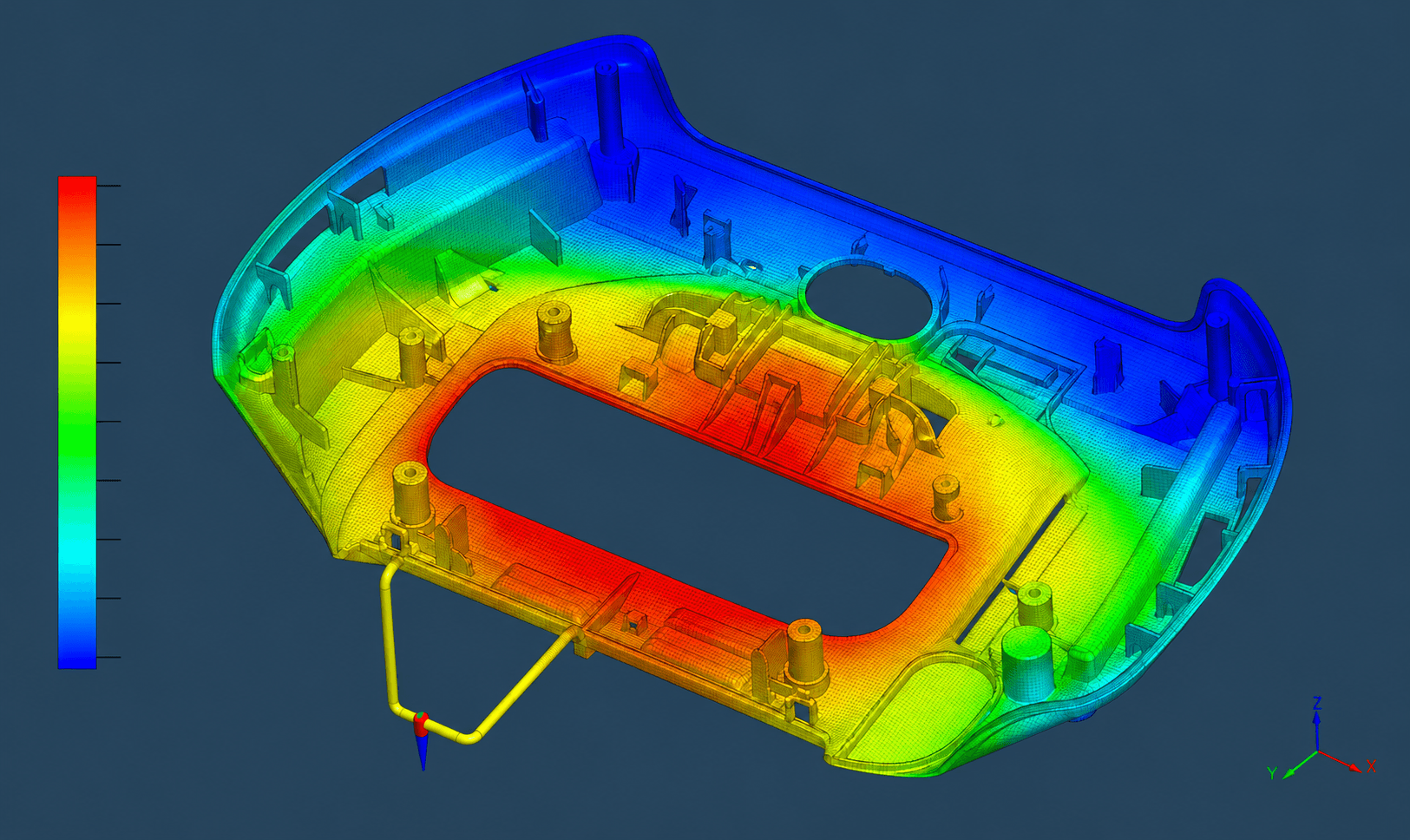
What Is Moldflow Analysis?
Moldflow analysis predicts how molten plastic fills, packs, cools and shrinks inside a mold. FEAmax uses the results to identify potential defects and compare part, gate, runner and cooling options before tooling changes or mold trials.
Evaluate fill balance, short-shot risk and injection pressure requirements.
Compare gate locations and runner layouts to support tooling decisions.
Assess dimensional changes and their potential effect on assembly requirements.
Review temperature distribution, cooling uniformity and cycle-time improvement opportunities.
Area of Expertise
Selected work
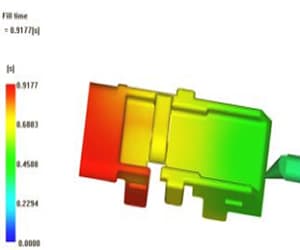
Moldflow filling time analysis to evaluate flow balance, short-shot risk, gate performance and filling sequence before tooling decisions.
View related project examples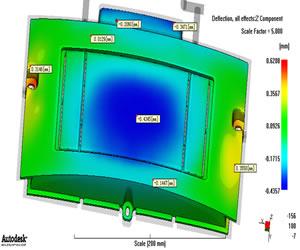
Warpage analysis to predict molded part deformation caused by material behavior, geometry, packing and cooling conditions.
View related project examples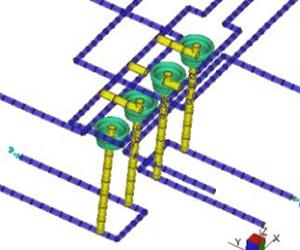
Cooling design analysis to review cooling line layout, part temperature control and tooling performance.
View related project examplesSend what you have. We can help identify the additional information needed to define the scope.
Typical outputs are tailored to the agreed scope and the engineering decision you need to make.
FEAmax reviews CAD geometry, material information, gate assumptions, tooling constraints and the main manufacturing concerns.
Material, gate, runner, cooling, process conditions and output expectations are clarified before the simulation setup.
Part geometry is meshed, thickness and flow paths are reviewed and critical features are checked.
The agreed study evaluates filling, packing, cooling, shrinkage or warpage; not every study requires all stages.
FEAmax reviews weld lines, air traps, pressure, shrinkage, hot spots, cooling balance and dimensional risks.
The final report summarizes risks, result images, gate or tooling comments and practical improvement recommendations.
Injection molding predictions depend on resin data, part thickness, gate layout and processing conditions. Recommendations should be reviewed with the mold maker and validated against molding trials as appropriate.
Resin, filler, fiber and temperature-dependent material data affect filling, pressure, shrinkage and warpage predictions.
Accurate wall thickness, ribs, bosses and mesh quality are critical for predicting flow, pressure and local risk areas.
Gate number, location, size and runner balance strongly influence fill pattern, pressure, weld lines and air traps.
Cooling channel layout, coolant temperature and mold temperature affect cycle time, shrinkage and warpage.
Fill time, melt temperature, packing pressure, mold temperature and switch-over settings should match realistic processing.
Moldflow results must be interpreted with part design, tooling feasibility, supplier constraints and production goals in mind.
A part-level filling or gate-location study may be possible before detailed tooling is available. Runner, cooling and process assumptions are agreed, and their effect on the predictions is explained.
Viscosity, thermal behavior, shrinkage and fiber data vary by material grade. We review available material data and identify limitations if the intended grade cannot be represented adequately.
These are secondary, separately scoped process studies, not interchangeable with injection molding analysis. Send the material, process and geometry so we can review the required methods and available support.
Share the part geometry, resin grade and molding concern to discuss a targeted Moldflow analysis.