Project Note
Practical context for engineering decisions.
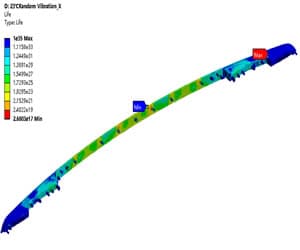
Structural simulation project reviewing vibration response, resonance risk and fatigue durability for an automotive lamp assembly exposed to road and mounting loads.
Project objective
This project evaluated vibration response and fatigue durability for a vehicle lamp assembly subject to road and mounting-related excitation. The goal was to determine whether the design could maintain structural integrity over repeated service loading.
Why vibration matters for automotive lamp assemblies
Lamp assemblies experience repeated excitation from vehicle motion, mounting conditions and environmental use. Even when static loads appear low, vibration can create resonance, amplified displacement or long-term fatigue damage in housings, brackets, lenses or attachment features.
What the engineering review considered
A study like this typically reviews modal behavior, local stress response and fatigue-prone regions under representative loading conditions. This helps identify whether the current design has vulnerable points that could lead to cracking, loosening or reduced durability during vehicle operation.
Using the result to improve durability
Simulation results can guide targeted design changes such as increasing stiffness, improving bracket support, refining local geometry or adjusting material use. That makes the development process more efficient because design improvements are directed by measured response instead of repeated physical trial-and-error.
How FEAmax supports vibration and fatigue projects
FEAmax supports vibration, resonance and fatigue analysis for automotive and industrial products where long-term durability matters. The focus is on identifying practical design changes that reduce risk before validation testing or production release.
What to send for review
- Project objective and current design concern
- CAD files, drawings, sketches or photos
- Material, load, flow or operating conditions
- Schedule target and required deliverables