
Computational fluid dynamics and thermal simulation

CFD Simulation & Computational Fluid Dynamics Services

FEAmax provides CFD simulation services to help engineering teams evaluate fluid flow, pressure drop, flow distribution, heat transfer and cooling performance before testing, prototyping or production.

CFD analysis scope

FlowInternal, external, steady and transient flow
PressurePressure drop, flow balance and distribution
ThermalCooling, heat transfer and temperature fields
ComplexMultiphase, particle, erosion and rotating systems

What Is CFD?

CFD is a virtual flow test for pressure, temperature and system performance.

Computational Fluid Dynamics is a simulation method used to predict how gases or liquids move through products, equipment, buildings and industrial systems.

CFD helps engineers understand flow behavior before testing, reduce prototype iterations, optimize cooling and pressure loss, compare design options and support product or process decisions.
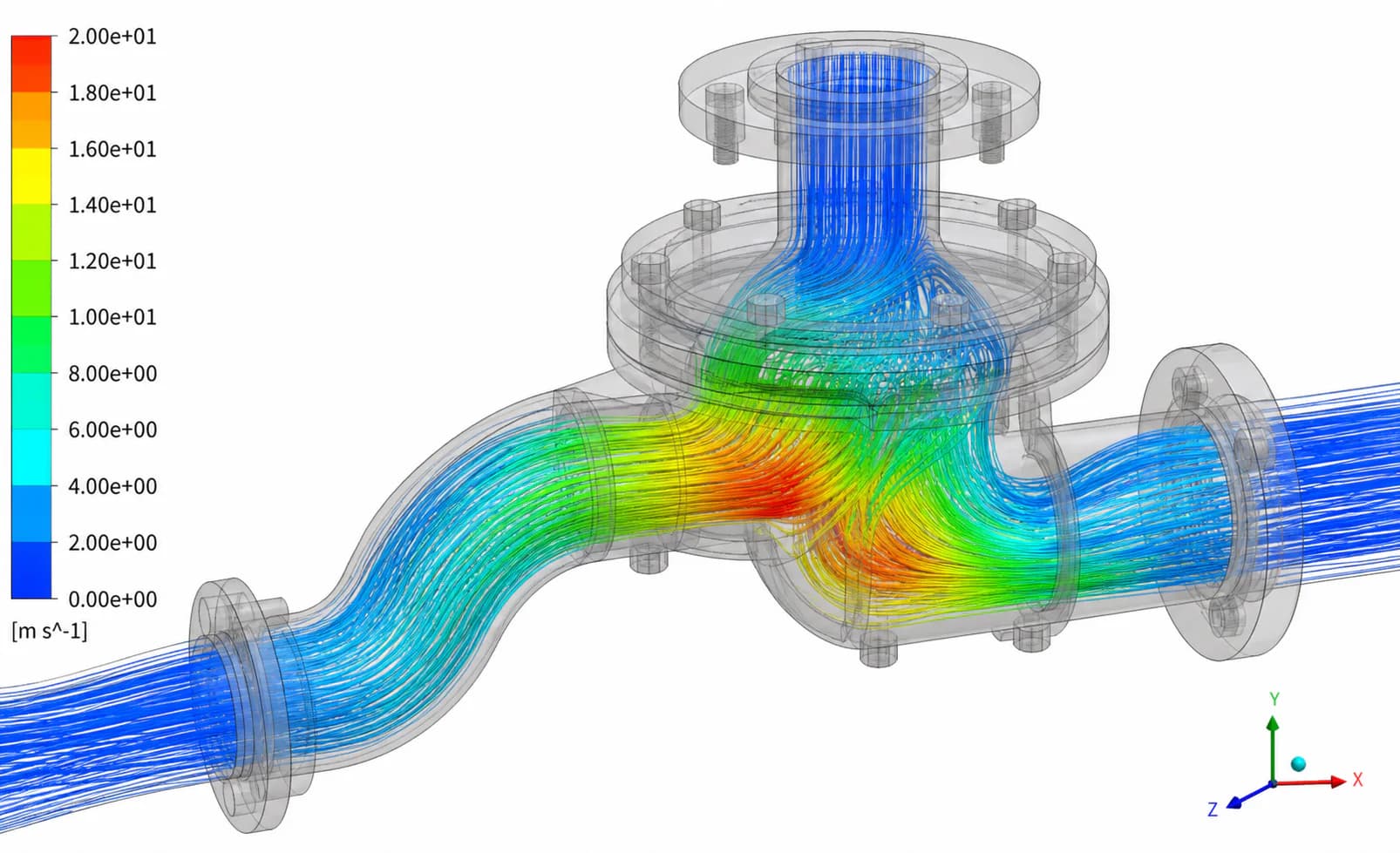
CFD flow simulation result through an industrial fluid system

Area of Expertise

CFD analysis types for flow, pressure, heat transfer and advanced fluid behavior.

Flow & Pressure Analysis

  • Steady-state and transient flow simulation
  • Internal and external flow analysis
  • Pressure drop and flow distribution review
  • Compressible and incompressible flow
  • Laminar and turbulent flow evaluation

Thermal & Cooling Analysis

  • Convection, conduction and radiation heat transfer
  • Electronics cooling and enclosure thermal review
  • HVAC, ventilation and airflow studies
  • Heat exchanger and cooling channel performance
  • Temperature field and thermal risk evaluation

Complex Flow Physics

  • Newtonian and non-Newtonian fluid behavior
  • Free surface flow and cavitation
  • Multiple streams and mixing performance
  • Distributed resistance and porous media flow
  • Buoyancy-driven and rotating flow effects

Advanced CFD Applications

  • Multiphase flow and particle tracking
  • Erosion and flow-induced wear review
  • Combustion, chemical reaction and mass transfer
  • Rotating machinery, fan, pump and impeller studies
  • Fluid-structure interaction support when needed

What we need to quote and run CFD

Clear boundary conditions improve CFD value.

  • 3D CAD model or 2D drawings of the fluid domain or product geometry
  • Fluid type, density, viscosity, temperature and other material properties
  • Inlet and outlet conditions such as flow rate, velocity, pressure or mass flow
  • Heat sources, wall temperatures, thermal loads or ambient conditions
  • Operating conditions, duty cycle, rotation speed or transient timing
  • Main concerns such as pressure drop, cooling, flow balance, velocity, cavitation or erosion
  • Known test data, performance targets or acceptance criteria when available
  • Expected deliverables, schedule and required level of detail

What We Provide

CFD deliverables focused on design decisions.

  • CFD analysis report with setup, assumptions, results and conclusions
  • Velocity, pressure, temperature and streamline plots
  • Flow rate, pressure drop, heat transfer and performance summaries
  • Volume fraction, cavitation, particle or erosion results when applicable
  • Boundary condition and mesh assumption summary
  • Flow path visualization and design observations
  • Design improvement recommendations and comparison comments
  • Images or animations for technical communication when useful

CFD Project Workflow

A structured process from fluid domain setup to engineering recommendations.

01

Review Geometry and Objective

FEAmax reviews CAD files, drawings, fluid domain, operating conditions and the main engineering questions.

02

Define Boundary Conditions

The analysis scope, fluid properties, inlet and outlet conditions, heat sources and output requirements are clarified.

03

Prepare Domain and Mesh

The fluid domain is created or cleaned, mesh controls are applied and critical flow regions are refined.

04

Run CFD Simulation

Steady or transient simulations are solved using appropriate physical models for flow, heat transfer or advanced physics.

05

Review Results

Velocity, pressure, temperature, convergence and engineering reasonableness are checked before recommendations are prepared.

06

Deliver Recommendations

FEAmax provides result plots, conclusions and practical design comments for product, system or process decisions.

How CFD Accuracy Is Controlled

Reliable CFD depends on physics setup, mesh quality and engineering review.

Boundary Conditions

Flow rate, pressure, velocity, temperature and heat source assumptions must reflect actual operating or test conditions.

Mesh Quality

Mesh density, boundary layer treatment and local refinement influence pressure drop, velocity and heat transfer results.

Physical Model Selection

Turbulence, multiphase, cavitation, radiation, rotating zones or transient models must match the real flow behavior.

Convergence Review

Residuals, mass balance, pressure drop, temperature and key outputs should be reviewed for stable and meaningful results.

Geometry Simplification

Small details can sometimes be removed, but important flow restrictions, leaks, clearances and heat paths must be retained.

Engineering Interpretation

CFD results require engineering judgment to distinguish true design issues from setup artifacts or numerical effects.

Representative CFD Project Types
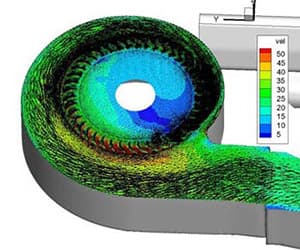
Simulation examples organized by flow and thermal problem type.

Water Flow Analysis

Water Flow Analysis

Evaluate internal liquid flow, velocity distribution, pressure loss and flow balance in channels, valves and systems.
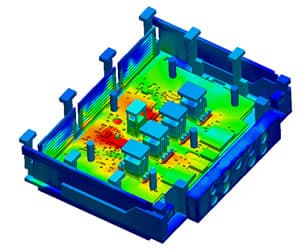
CFD Thermal Analysis

CFD Thermal Analysis

Review heat transfer, temperature distribution and cooling performance for components, enclosures and equipment.
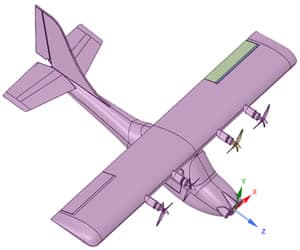
Air / Gas Flow Analysis

Air / Gas Flow Analysis

Analyze airflow, ventilation, external aerodynamics, pressure zones and air movement through ducts or products.

View All CFD Projects

Applications and Industries

CFD support for products, equipment, buildings and industrial systems.

CFD is useful when flow, pressure, cooling, ventilation, mixing, erosion or thermal performance needs to be understood before physical testing or production changes.

Aerospace
Automotive
Energy
Oil & Gas
Maritime
Environmental Engineering
Chemical Process Industry
HVAC and Ventilation
Electronics Cooling
Manufacturing
Biomedical
Industrial Equipment
Pumps and Valves
Thermal Management

Related Services

Common CFD tool environments may include ANSYS Fluent, SolidWorks Flow Simulation and other engineering simulation tools depending on project requirements.

Start a CFD Project

Need CFD simulation for flow, pressure drop, cooling or thermal risk?

Send CAD files, operating conditions, fluid properties, flow requirements or thermal loads. FEAmax can review the scope and recommend a practical CFD simulation approach.