Injection Molding Analysis
- Filling and packing analysis
- Gate location and gate size optimization
- Runner balance and feed system review
- Injection pressure and clamp force evaluation
- Weld line, air trap and filling risk identification
Injection molding and tooling-risk simulation
FEAmax uses Moldflow analysis to evaluate filling, packing, cooling, warpage, shrinkage, gate design and tooling risk before mold changes or production trials.
Moldflow analysis scope
What Is Moldflow Analysis?
Moldflow analysis predicts how molten plastic fills, packs, cools and shrinks inside a mold. It helps identify weld lines, air traps, sink marks, pressure risk, shrinkage and warpage before physical mold trials.
Used early, Moldflow can reduce tooling risk, improve gate and runner design, reduce trial-and-error iterations and support better decisions for part design, mold design and production process setup.
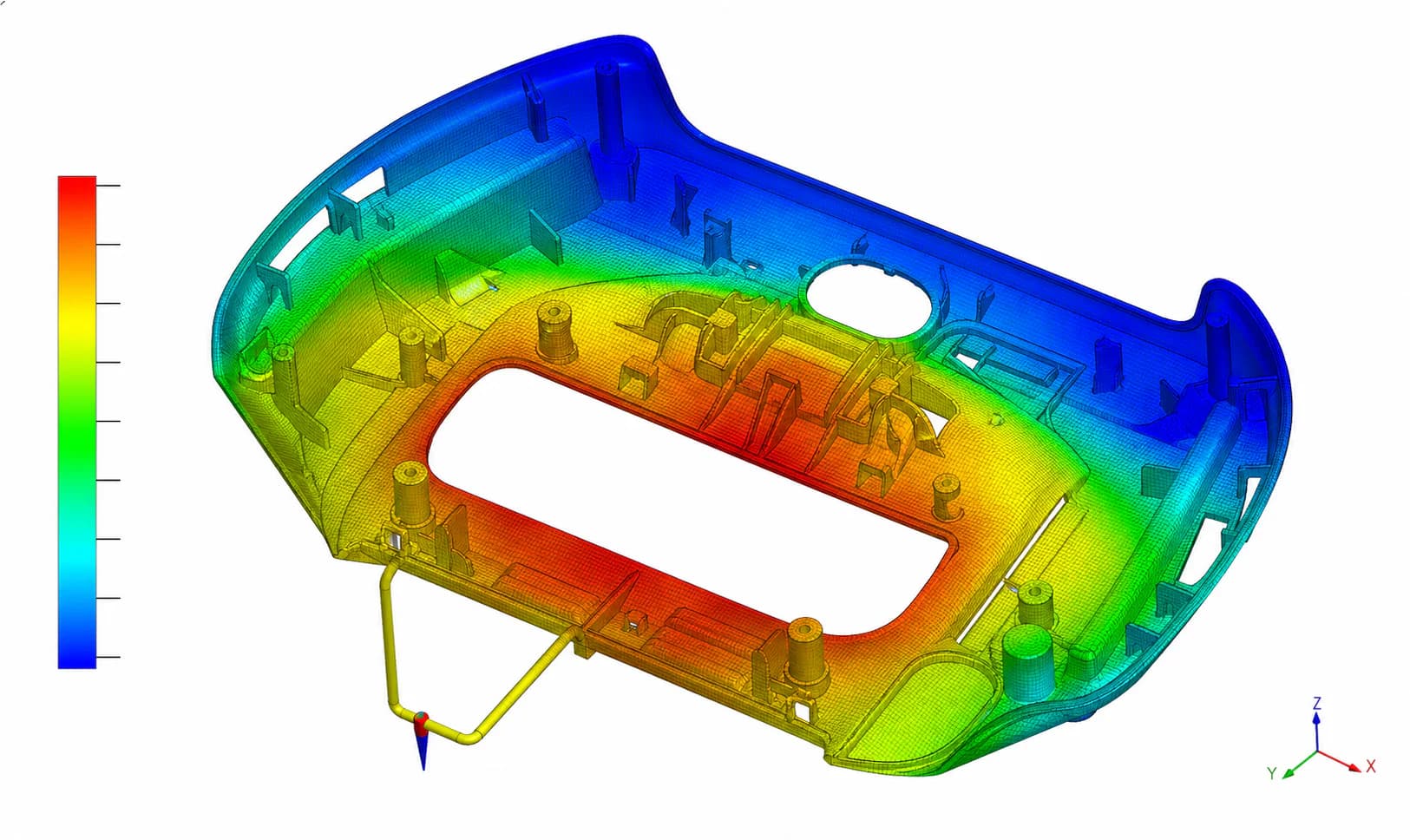
Area of Expertise
What we need to quote and run Moldflow
What We Provide
Moldflow Project Workflow
FEAmax reviews CAD geometry, material information, gate assumptions, tooling constraints and the main manufacturing concerns.
Material, gate, runner, cooling, process conditions and output expectations are clarified before the simulation setup.
The part or casting geometry is meshed, thickness and flow paths are reviewed and critical features are checked.
The analysis evaluates filling, packing, cooling, shrinkage, warpage or casting behavior depending on the project scope.
FEAmax reviews weld lines, air traps, pressure, shrinkage, hot spots, cooling balance and dimensional risks.
The final report summarizes risks, result images, gate or tooling comments and practical improvement recommendations.
How Moldflow Accuracy Is Controlled
Resin, filler, fiber and temperature-dependent material data affect filling, pressure, shrinkage and warpage predictions.
Accurate wall thickness, ribs, bosses and mesh quality are critical for predicting flow, pressure and local risk areas.
Gate number, location, size and runner balance strongly influence fill pattern, pressure, weld lines and air traps.
Cooling channel layout, coolant temperature and mold temperature affect cycle time, shrinkage and warpage.
Fill time, melt temperature, packing pressure, mold temperature and switch-over settings should match realistic processing.
Moldflow results must be interpreted with part design, tooling feasibility, supplier constraints and production goals in mind.
Representative Moldflow Project Types
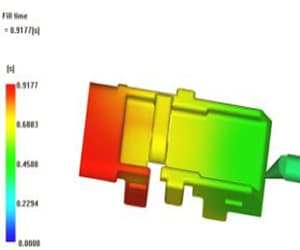
Evaluate filling pattern, flow front, injection pressure and packing behavior before tooling decisions.
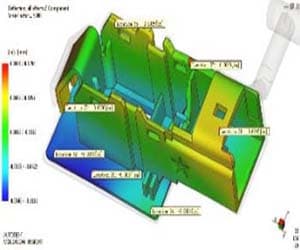
Predict shrinkage-driven deformation and dimensional risk for molded plastic parts and assemblies.
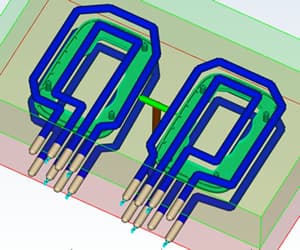
Review cooling channel layout, heat extraction, temperature balance and cycle-time related risk.
Applications and Industries
Moldflow and casting simulation are useful when part quality, tooling risk, cycle time, dimensional control or production readiness need to be evaluated before mold trials or manufacturing launch.
Start a Moldflow Project
Send CAD files, resin data, gate assumptions, process information or molding concerns. FEAmax can review the scope and recommend a practical Moldflow analysis approach.