Project Note
Practical context for engineering decisions.
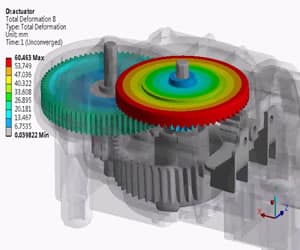
Transient structural analysis example for a gear assembly where time-varying loads, contact behavior and dynamic response influence stress and deformation during operation.
Project objective
This transient FEA project evaluated how a gear assembly responded to time-varying operating loads. The goal was to understand dynamic stress and deformation behavior during motion rather than relying only on a simplified static load case.
Why transient analysis is important for gear systems
Gear assemblies often experience load changes over time as teeth engage, speeds vary and torque is transferred through multiple components. A static result can miss dynamic peaks that occur during real operation, especially when contact, acceleration or local stiffness changes influence the response.
What the simulation helps reveal
A transient study helps identify when the highest response occurs, which regions see repeated stress peaks and how the assembly deforms during operation. This gives engineers a better basis for evaluating durability, local contact effects and whether the geometry is appropriate for the intended loading cycle.
Supporting design refinement and reliability
The result can guide changes such as local geometry refinement, stiffness improvement or adjustment of load-bearing features. That is valuable because it helps the team address dynamic risk before building hardware or discovering the issue later in testing.
How FEAmax supports dynamic mechanical projects
FEAmax supports transient and dynamic structural analysis for assemblies where load changes over time influence product reliability. The focus is on translating simulation results into practical changes that improve performance and reduce development risk.
What to send for review
- Project objective and current design concern
- CAD files, drawings, sketches or photos
- Material, load, flow or operating conditions
- Schedule target and required deliverables