Project Note
Practical context for engineering decisions.
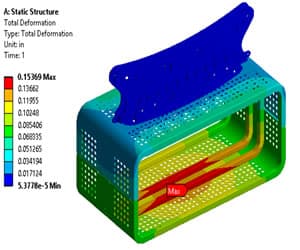
Structural stress review example for a zipline basket subject to operating loads, passenger-related forces and safety-driven design requirements.
Project objective
This project evaluated the structural stress response of a zipline basket under representative operating loads. The main goal was to verify whether the basket design could satisfy functional and safety-related load requirements during use.
Why safety-oriented stress analysis is critical
For passenger-carrying or safety-related equipment, structural review must go beyond basic geometry checks. Engineers need to understand how the load is transferred through the frame, where stress concentrates and whether the design has appropriate margin for the intended use case.
What the simulation helps reveal
The FEA result highlights highly loaded regions, deformation trends and local features that may need reinforcement or redesign. This is especially valuable when the structure includes weldments, brackets, curved members or attachment points that can become critical under service loading.
Supporting safer design decisions
The practical value of the analysis is that it supports targeted structural improvement before fabrication or certification-related review. Instead of relying on conservative guesswork alone, the engineering team can focus on the parts of the basket that most influence strength and user safety.
How FEAmax supports safety-related structures
FEAmax supports stress and structural validation work for products and assemblies where safety, load capacity and compliance concerns are central to the design decision. The goal is to provide clear technical evidence that helps customers improve reliability and confidence in the final structure.
What to send for review
- Project objective and current design concern
- CAD files, drawings, sketches or photos
- Material, load, flow or operating conditions
- Schedule target and required deliverables