Project Note
Practical context for engineering decisions.
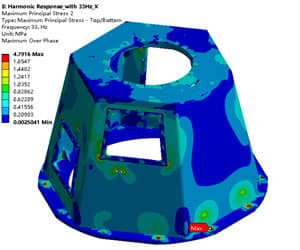
Simulation example for evaluating structural response, support loads and high-stress regions under seismic and shock-related loading conditions.
Project objective
This project evaluated structural response under seismic and shock-related loading conditions. The purpose was to understand how the assembly behaved during sudden or externally imposed events that could create high stress, displacement or support reaction loads.
Why seismic and shock evaluation is necessary
Structures and equipment used in demanding environments may experience short-duration events that are far more severe than normal operating loads. Without targeted analysis, it is difficult to know whether supports, frames or local features have enough margin to withstand those conditions.
What the simulation helps identify
This kind of FEA study highlights critical stress regions, likely deformation trends and how loads are transferred through supports and attachments during a shock or seismic event. That helps engineers determine which parts of the structure govern survivability and stability.
Supporting reinforcement and restraint decisions
Results from the analysis can guide reinforcement strategy, support redesign, attachment improvement or layout refinement. Instead of overdesigning the entire assembly, the team can focus on the structural details that matter most under severe event loading.
How FEAmax supports event-load structural review
FEAmax supports seismic, shock and severe-load structural analysis for equipment and assemblies where abnormal loading events must be considered. The result is a practical engineering basis for improving robustness and reducing risk in critical service environments.
What to send for review
- Project objective and current design concern
- CAD files, drawings, sketches or photos
- Material, load, flow or operating conditions
- Schedule target and required deliverables