Project Note
Practical context for engineering decisions.
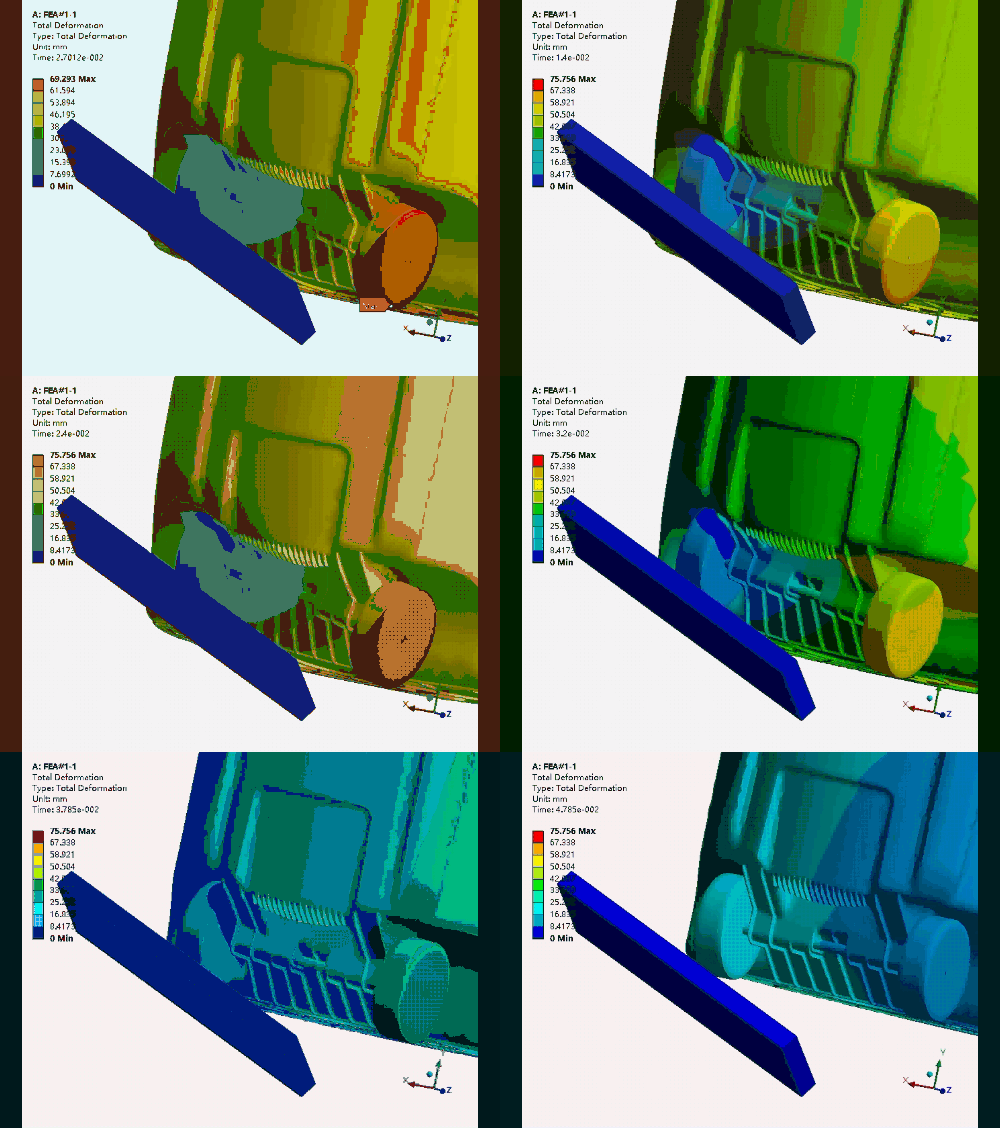
Dynamic impact simulation example for predicting deformation, contact response and high-stress regions in a trash can assembly after a representative drop event.
Project objective
This drop test simulation evaluated how a trash can assembly responded to impact after a representative drop event. The purpose was to identify high-stress regions, likely deformation patterns and whether the design had sufficient durability for accidental handling loads.
Why drop test analysis is useful
Products that are lifted, moved or used in demanding environments can experience sudden impact loads that are difficult to judge from static review alone. Drop simulation helps engineering teams understand whether local features, joints or wall sections are vulnerable before physical testing begins.
What the impact model helps reveal
A dynamic FEA study can show contact-driven stress concentration, displacement response and areas where cracking or permanent deformation are most likely to appear. That information is especially useful when the design includes corners, attachment points or thin sections that may respond differently during impact.
Using the result to improve durability
Simulation-guided changes may include adjusting geometry, increasing local stiffness, improving material distribution or refining connection details. The value is that teams can target the weak points directly instead of relying only on repeated prototype testing to discover the same problem.
How FEAmax supports impact projects
FEAmax supports drop test, impact and transient structural analysis for consumer, industrial and mechanical products where accidental loading or handling events must be considered. The result is a practical review of where the design is vulnerable and how it can be improved before release.
What to send for review
- Project objective and current design concern
- CAD files, drawings, sketches or photos
- Material, load, flow or operating conditions
- Schedule target and required deliverables