Project Note
Practical context for engineering decisions.
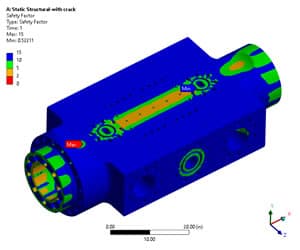
FEA project focused on crack growth risk, stress concentration and durability evaluation in an engine-related component operating under repeated loading conditions.
Project objective
This FEA project focused on crack propagation risk in an engine-related component. The purpose was to understand how local stress conditions could influence crack growth and how that risk affected structural durability and service performance.
Why crack propagation analysis is important
Once a crack initiates, the key engineering question is not only whether the part is damaged today, but how quickly the damage may grow under future loading. Crack propagation analysis helps teams evaluate whether the design has sufficient durability margin or whether geometry, material or maintenance strategy should be revised.
What the simulation helps reveal
This kind of study highlights stress concentration, likely crack-driving regions and the relationship between loading conditions and fracture risk. It gives the engineering team better visibility into whether a local feature, thickness change or operating load is creating an unacceptable durability concern.
Supporting repair, redesign or life assessment
The practical value of the analysis is that it helps teams choose a response based on engineering evidence. That may mean redesigning the component, improving a local feature, adjusting the loading environment or using the result to guide inspection and service-life decisions.
How FEAmax supports durability investigations
FEAmax supports fracture-related and durability-focused analysis for components where repeated loading, local stress concentration or failure history requires deeper investigation. The objective is to help customers move from observed damage to a clearer technical decision.
What to send for review
- Project objective and current design concern
- CAD files, drawings, sketches or photos
- Material, load, flow or operating conditions
- Schedule target and required deliverables